Customer expectations have shifted—people want instant, personalized responses without waiting on hold or filling out long forms. Modern businesses are turning to AI-driven solutions to meet this demand, transforming traditional support into a smooth, interactive experience. At the heart of this shift is conversational service, which allows companies to engage customers in natural, flowing conversations across multiple channels.
Imagine your customers getting clear, friendly answers the moment they need help, on the channel they prefer, without waiting in a phone queue or repeating themselves. That is the promise of modern conversational service - customer support that feels like a natural, ongoing conversation rather than a one-off transaction.
In this guide, you will explore real-world call center automation use cases and understand the benefits of an AI call center, showing how this approach can deliver faster support, happier customers, and a more efficient team.
Beyond just improving response times, businesses can leverage advanced cloud computing solutions - FlashMob Computing to handle large volumes of customer interactions seamlessly. Integrating such tools ensures your AI-powered support system runs efficiently - Supercomputer Box, even during peak demand periods. For marketers, understanding how to enhance customer engagement - Marketing for Customers can create a more personalized experience, bridging the gap between automated responses and human-like interactions.
Many companies have seen tangible results by following practical AI strategies - Marketing Runners. These approaches not only streamline daily operations but also reduce human error, allowing agents to focus on complex queries. In addition, using top financial and operational resources - Top Financial Resources can guide managers in choosing the right platforms and measuring ROI effectively. By combining the right technology with thoughtful implementation, organizations can deliver a truly seamless AI-enhanced conversational support experience.
Ultimately, adopting these methods allows teams to move beyond traditional support models. Customers feel heard, valued, and understood, making conversational service solutions for modern businesses not just a tool, but a strategic advantage.
Top 10 Contact Center Solutions for Conversational Service
Finding the right contact center solution is critical for businesses that want to deliver seamless, efficient, and personalized customer support. Modern solutions powered by AI can transform traditional call centers into advanced conversational platforms. Here’s a list of the top 10 solutions to consider.
1. Bright Pattern – AI-Powered Conversational Service Solution
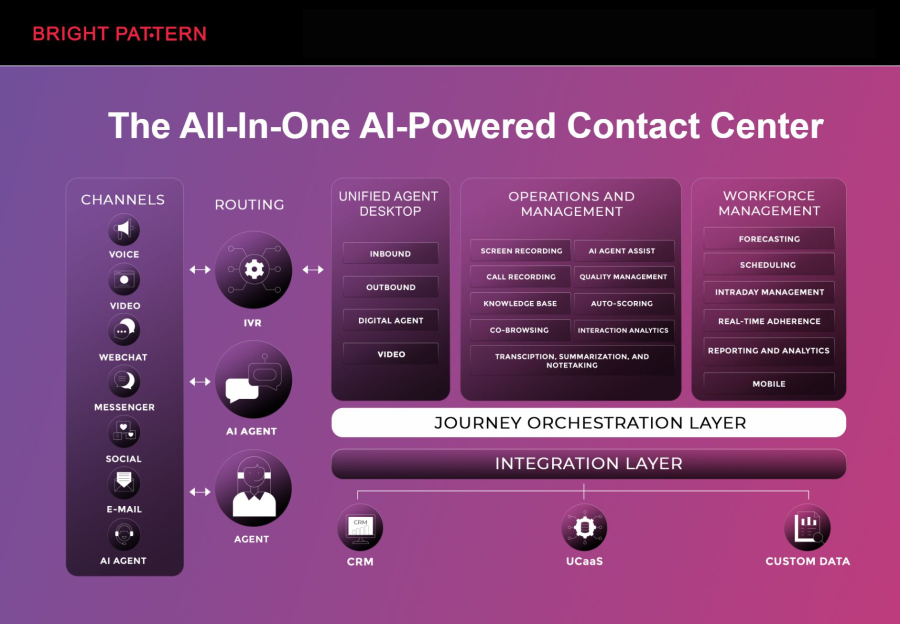
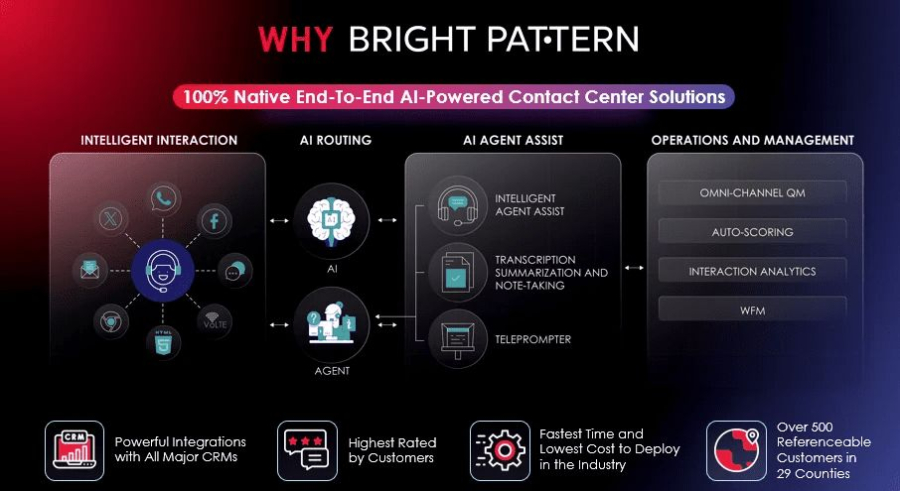
Bright Pattern leads the way in providing advanced contact center technology that supports true conversational service. With its AI-powered platform, businesses can engage customers across multiple channels, including voice, chat, email, and social messaging.
Key features of Bright Pattern include:
- AI-driven routing that ensures every customer reaches the right agent quickly
- Intelligent chatbots for 24/7 support without losing a human touch
- Omnichannel reporting and analytics to optimize team performance
- Seamless integration with CRM systems and third-party business applications
- Cloud-based deployment that allows scalability and flexibility
Bright Pattern’s solution is ideal for companies looking to streamline call center operations, improve response times, and provide a consistent conversational experience. By combining AI automation with intuitive agent tools, it empowers teams to deliver faster resolutions while keeping customers satisfied.
2. Five9 – Cloud Contact Center for AI-Enhanced Conversations
Five9 offers a robust cloud contact center platform designed to enhance conversational service with predictive dialing, AI-driven routing, and advanced reporting tools.
3. Genesys Cloud CX – Omnichannel Contact Center Platform
Genesys Cloud CX enables businesses to manage customer interactions across voice, chat, email, and social platforms, integrating AI assistants to streamline service and support.
4. NICE inContact – Intelligent Customer Engagement Platform
NICE inContact provides AI-powered automation, workforce optimization, and advanced analytics to help businesses deliver seamless conversational service.
5. Talkdesk – AI-Enhanced Cloud Contact Center
Talkdesk combines AI, automation, and analytics to deliver highly personalized customer experiences and increase agent efficiency.
6. RingCentral Contact Center – Integrated Omnichannel Solution
RingCentral offers AI-driven capabilities for routing, chatbots, and performance tracking to help teams manage customer interactions efficiently.
7. 8x8 Contact Center – Scalable AI-Driven Solution
8x8 provides an omnichannel contact center platform with conversational AI, analytics, and automated workflows to improve customer engagement.
8. Cisco Webex Contact Center – Enterprise-Level Solution
Cisco Webex Contact Center integrates AI and analytics for a seamless conversational experience across multiple channels.
9. Avaya OneCloud – Cloud Contact Center Platform
Avaya OneCloud provides AI and automation tools for routing, chatbots, and workflow management, helping businesses enhance their conversational service.
10. Vonage Contact Center – Flexible Cloud Solution
Vonage’s contact center solution offers AI-powered tools, real-time reporting, and omnichannel support to optimize both customer and agent experiences.
What Is Conversational Service?
Conversational serviceis a way of delivering customer support through natural, back-and-forth interactions across channels like live chat, messaging apps, in-app chat, SMS, and even voice. Instead of forcing customers into rigid tickets or phone trees, you serve them in a fluid conversation that can pause, resume, and continue with full context.
In practical terms, conversational service usually combines:
- Real-time chaton your website or app.
- Asynchronous messaging(customers can come and go like with text messages).
- AI assistants and chatbotsto handle simple, repetitive tasks instantly.
- Human agentsfor complex, sensitive, or high-value conversations.
- Shared contextso every interaction builds on the last, instead of starting from zero.
Done well, conversational service feels like texting a helpful, informed friend who already knows your history and preferences.
Why Conversational Service Matters Now
Customer expectations have changed dramatically. People are used to the speed and ease of everyday messaging in their personal lives, and they expect the same when dealing with businesses.
Conversational service matters because customers now expect:
- Instant answers— they do not want to wait in a queue or for an email reply.
- Anytime, anywhere support— across devices and channels, on their schedule.
- Low effort experiences— no endless forms or repeating details.
- Human tone and empathy— even when interacting with AI.
Organizations that embrace conversational service are better positioned to meet these expectations while staying efficient and scalable.
Key Benefits of Conversational Service
Moving to a conversational approach is not just a technology upgrade; it is a strategic shift that can transform your customer experience and your bottom line.
1. Faster, Frictionless Support
- Reduced wait times.Chat and messaging dramatically cut the time customers spend waiting for help.
- Instant resolutions for simple questions.AI assistants can handle FAQs, order status, basic troubleshooting, and more.
- No need to start over.Customers can pick up where they left off, even if they switch devices or return later.
2. Higher Customer Satisfaction and Loyalty
- More personal interactions.Conversations can use names, preferences, and history to feel tailored.
- Less frustration.Customers avoid repeating the same story to multiple agents.
- Memorable experiences.Friendly, conversational support stands out and becomes a reason to return.
3. Lower Support Costs Without Sacrificing Quality
- AI handles high-volume, low-value tasks.This frees human agents to focus on complex or high-impact issues.
- Agents can manage multiple chats at once.Unlike phone calls, chat and messaging can be multiplexed.
- Self-service within conversations.Customers can receive relevant knowledge articles directly inside the chat.
4. Deeper Customer Insights
- Rich conversational data.Every message reveals needs, language, objections, and product feedback.
- Better understanding of journeys.You see where customers struggle and which moments matter most.
- Improved product and marketing decisions.Themes from conversations can guide roadmaps and campaigns.
5. Better Agent Experience
- More meaningful work.With automation covering repetitive tasks, agents spend time solving real problems.
- Less stress.Messaging is often calmer and more manageable than back-to-back phone calls.
- Stronger sense of impact.Agents see results fast and can build stronger relationships with customers.
Conversational Service vs. Traditional Support
To understand the shift, it helps to compare conversational service with traditional, ticket-based support.
Aspect | Traditional Support | Conversational Service |
Channel style | Phone and email, formal and one-off | Chat and messaging, natural and continuous |
Customer effort | High effort, repeated explanations | Low effort, context carries forward |
Speed | Slower, fixed hours and queues | Faster, often instant and always-on |
Scalability | Limited by human agents alone | Scales with AI and automation |
Customer relationship | Transactional and fragmented | Ongoing and relationship-driven |
Core Components of an Effective Conversational Service Strategy
Successful conversational service is not just about adding a chat widget. It is about building an ecosystem that feels seamless to customers and sustainable for your team.
1. The Right Channels and Touchpoints
Start with the channels your customers actually use most. Common options include:
- Website live chat.Ideal for pre-purchase questions and quick support.
- In-app chat.Perfect for software, mobile apps, and logged-in experiences.
- Business messaging.Using messaging channels where your customers already spend time.
- SMS or text.Useful for quick updates, reminders, or simple questions.
Make entry points clear and easy to find, and be consistent about which channels you actively support.
2. Human and AI Working Together
The most effective conversational service blends automation with human expertise.
- AI assistantshandle greetings, routing, FAQs, and basic tasks.
- Human agentstake over nuanced, emotional, or complex issues.
- Seamless handoffsensure customers never feel abandoned or stuck with a bot.
The goal is not to replace humans, but to augment them so your team can focus where they add the most value.
3. A Centralized Knowledge Base
Behind every strong conversational service is a strong information backbone.
- Up-to-date documentation.Clear answers to frequent questions and issues.
- Searchable content.Easy for both AI and agents to retrieve.
- Consistent messaging.Customers receive the same accurate answer, regardless of channel.
4. Personalization and Context
Context turns a basic interaction into a meaningful conversation.
- Customer profiles.Past purchases, preferences, and prior conversations.
- Behavioral data.What customers are trying to do right now, such as pages viewed or actions attempted.
- Smart routing.Direct conversations to the best agent or AI flow based on who the customer is and what they need.
5. Analytics and Continuous Improvement
Because every conversation is digital, you can measure and improve quickly.
- Conversation analytics.Track volumes, topics, sentiment, and outcomes.
- Feedback loops.Use ratings and comments to refine scripts, flows, and knowledge content.
- Experimentation.Test small changes to greetings, flows, and responses, then scale what works.
Popular Use Cases for Conversational Service
Conversational service fits into almost every stage of the customer journey, across industries.
- Pre-sales support.Answer product questions, compare options, and reduce buying friction.
- Onboarding and activation.Guide new users step by step inside your product or service.
- Account and billing questions.Handle plan changes, invoices, and payment issues quickly.
- Technical troubleshooting.Walk customers through fixes with interactive, real-time guidance.
- Order updates.Provide shipping status, delivery changes, and returns inside a chat thread.
- Proactive retention.Reach out when customers show signs of confusion or churn, offering timely help.
Industry Examples
- Retail and e-commerce.Live product advice, sizing help, and instant order support.
- SaaS and software.In-app assistance, feature education, and troubleshooting.
- Financial services.Secure messaging for account queries, card issues, and guidance.
- Healthcare.Appointment scheduling, reminders, and non-clinical information.
- Travel and hospitality.Booking support, itinerary changes, and real-time trip updates.
How to Implement Conversational Service Step by Step
You do not need to transform everything overnight. A phased approach helps you deliver quick wins while building a scalable foundation.
Step 1: Clarify Your Goals
Decide what success looks like for your conversational service.
- Do you want to reduce response times?
- Increase customer satisfaction?
- Deflect basic queries from phone and email?
- Drive more conversions or revenue from pre-sales conversations?
Clear goals will shape all your decisions around channels, tools, and staffing.
Step 2: Map the Customer Journey
Identify where conversational service can add the most value.
- List the key stages: awareness, consideration, purchase, onboarding, support, renewal.
- For each stage, note the common questions and pain points.
- Decide where a live conversation would reduce friction the most.
Step 3: Choose Your Channels and Technology
Select a conversational platform or tools that can:
- Support your priority channels (website, in-app, messaging, SMS).
- Offer both human and automated conversations.
- Integrate with your existing systems, such as CRM and knowledge base.
- Provide reporting and analytics on conversations.
Step 4: Design Conversation Flows
Plan the experience your customers will have, especially when AI is involved.
- Greeting flows.How do you welcome visitors and understand their intent?
- Routing logic.When should AI respond, and when should it hand off to a human?
- Fallback paths.What happens if the assistant does not understand?
- Language and tone.Write responses in a friendly, consistent, brand-aligned voice.
Step 5: Prepare and Empower Your Team
Your agents are at the heart of conversational service.
- Train them on the platform and new workflows.
- Provide updated scripts and guidelines rooted in conversational language.
- Encourage empathy, active listening, and proactive problem-solving.
- Share clear escalation paths for complex or sensitive issues.
Step 6: Launch, Listen, and Iterate
Start with a limited scope, monitor performance, and improve continuously.
- Begin with a focused use case or single channel.
- Collect customer feedback after conversations.
- Adjust flows, content, and staffing based on real data.
- Gradually expand to additional use cases and channels as you gain confidence.
Best Practices for High-Quality Conversations
Technology is only one piece of the puzzle. The way you communicate truly defines the experience.
1. Use Natural, Human Language
- Avoid jargon where possible; explain concepts clearly.
- Mirror the customer’s tone while staying professional and respectful.
- Write in short, clear sentences that are easy to scan.
2. Show Empathy and Ownership
- Acknowledge feelings or frustration before jumping into solutions.
- Use phrases that show you are taking responsibility and following through.
- Summarize what you will do next so customers know they are in good hands.
3. Maintain Context Across Touchpoints
- Keep a record of past conversations and key details.
- Avoid asking customers to repeat information you already have.
- When handing off between agents or from AI to human, include a brief summary.
4. Balance Speed with Quality
- Respond quickly, even if it is just to say you are investigating.
- Use templates and snippets to speed up, but personalize them.
- Do not sacrifice accuracy just to answer a few seconds faster.
5. Close the Loop Clearly
- Confirm when an issue is resolved and recap the outcome.
- Offer next steps or resources for future reference.
- Invite feedback to learn how the experience felt from the customer’s perspective.
Measuring the Success of Your Conversational Service
To prove the value of conversational service, you need clear metrics tied back to your goals.
- First response time.How quickly do you reply to new conversations?
- Time to resolution.How long does it take to fully solve the issue?
- Customer satisfaction (CSAT).How do customers rate their experience?
- Net promoter score (NPS).How likely are customers to recommend you overall?
- Containment rate.What percentage of conversations are resolved by AI without needing a human?
- Cost per contact.How does the cost of supporting customers change over time?
- Revenue impact.For pre-sales conversations, how often do chats lead to purchases or upgrades?
Review these metrics regularly, and use them to guide improvements to both your technology and your team’s approach.
The Future of Conversational Service
Conversational service is evolving rapidly, opening up even more possibilities.
- More advanced AI assistants.Capable of understanding nuance, context, and complex tasks.
- Omnichannel continuity.Conversations that move seamlessly between web, mobile, and other channels with full context preserved.
- Proactive assistance.Support that anticipates issues and reaches out before customers ask.
- Agent co-pilots.AI tools that suggest replies, summarize context, and surface relevant knowledge for human agents.
- Deeper personalization.Experiences tailored not just to who the customer is, but what they are trying to achieve right now.
Organizations that invest early and thoughtfully in conversational service are setting the standard for effortless, human-centered customer experiences.
Bringing It All Together
Conversational service is more than a new support channel. It is a more natural, responsive way of building relationships with your customers — one message, one moment, and one meaningful interaction at a time.
By combining the strengths of human agents and AI, choosing the right channels, and focusing relentlessly on clarity, empathy, and continuous improvement, you can create a support experience that feels effortless for customers and efficient for your team.
The result is a powerful win-win: faster answers, happier customers, more engaged agents, and a stronger, more resilient business.
